

WEBSITE
PROMOTION
PROMOTION
GEO

GENERATIVE ENGINE OPTIMIZATION (GEO) – A MODERN CONTENT OPTIMIZATION STRATEGY FOCUSED ON BOOSTING YOUR BRAND'S VISIBILITY IN AI-GENERATED LLM RESPONSES











IN GREAT COMPANY
YOU'LL BE
clients



GEO WEBSITE OPTIMIZATION
HOW IT WORKS
results
PROVEN
cases


MEDICAL CLINIC GEO PROMOTION
APPOINTMENT GROWTH
2.5X
AI SEARCH CITATIONS
+970%

LOGISTICS COMPANY PROMOTION
B2B CONTACTS GROWTH
3X
CHATGPT MENTIONS
+1250%

EDTECH PLATFORM GEO PROMOTION
STUDENT COUNT GROWTH
7X
AI OVERVIEWS VISIBILITY
+890%

HR AGENCY WEBSITE GEO OPTIMIZATION
EMPLOYER INQUIRY GROWTH
4X
AI SEARCH MENTIONS
+880%

CAR DEALERSHIP WEBSITE GEO OPTIMIZATION
INQUIRY GROWTH
3X
ORGANIC TRAFFIC GROWTH
5X

ORAL CARE BRAND PROMOTION
SALES GROWTH
в 2.5 раза
AI ANSWER MENTIONS
+1100%

AUTO IMPORT COMPANY PROMOTION
LEAD GROWTH
3X
CHATGPT CITATIONS
+950%

LEGAL COMPANY GEO OPTIMIZATION
ORGANIC TRAFFIC GROWTH
6X
AI ASSISTANT CITATIONS
+840%

STORAGE COMPANY PROMOTION
CHATGPT MENTIONS
+1620%
AI SEARCH QUERIES
>9K/month
WEBSITE PROMOTION
order GEO

*required fields
*
*required fields
*
FOR AI-POWERED SEARCH:
BRAND OPTIMIZATION
GEO

Regular analysis of how generative systems mention your brand enables real-time strategic adjustments to your GEO optimization approach.
Process:
Result:
A comprehensive map of your brand's presence in AI responses. We create targeted content for platforms that generative systems treat as authoritative sources in your industry. Strategic precision, not guesswork.
Process:
- Testing visibility in ChatGPT, Claude, Perplexity, and other platforms for key industry queries
- Analyzing competitors: which brands AI search cites most frequently and from which sources
- Identifying priority platforms: forums, YouTube, social media, industry publications
- Assessing citation sentiment (positive, neutral, negative)
Result:
A comprehensive map of your brand's presence in AI responses. We create targeted content for platforms that generative systems treat as authoritative sources in your industry. Strategic precision, not guesswork.

MONITORING BRAND CITATIONS IN AI RESPONSES
AI-powered search systems analyze content on YouTube, LinkedIn, Reddit, TikTok, and dozens of other platforms. Your brand's presence across different channels amplifies its authority in the eyes of generative models.
What We Do:
Result:
Your brand gains visibility across multiple formats and contexts. AI search receives expertise confirmation from numerous independent sources, dramatically increasing chances of appearing in neural search results.
What We Do:
- Video content for YouTube, TikTok, Reels with SEO optimization
- Professional networking on LinkedIn, discussions on Reddit
- Long-form articles on Medium, Substack, and industry platforms
- Visual content on Pinterest and Instagram to showcase products
- Audience engagement on Twitter, Facebook, and Discord
Result:
Your brand gains visibility across multiple formats and contexts. AI search receives expertise confirmation from numerous independent sources, dramatically increasing chances of appearing in neural search results.

MULTI-PLATFORM PROMOTION
Next-generation language models (ChatGPT, Claude, Perplexity, and others) generate responses based not only on direct links but also on contextual brand mentions across the web. Even plain text references without hyperlinks influence how AI perceives your authority. GEO optimization strategy requires systematic management of your brand's digital footprint across all channels.
Digital Presence Analysis
Digital Reputation Management
Co-Citation Strategy
Link Profile Development
Result:
A solid reputation as an industry expert emerges. Your brand consistently appears in relevant industry contexts, increasing trust with both traditional search engines and neural search systems. This is critical for appearing in AI overviews and generative responses.
Digital Presence Analysis
- Monitoring all mentions of your company, product lines, and leadership across Google and social platforms
- Evaluating sentiment: amplifying positive reviews while addressing negative feedback
- Testing how your brand appears in responses from ChatGPT, Claude, Perplexity, and other AI search systems
Digital Reputation Management
- Building systems for managing customer reviews on key platforms
- Creating expert content demonstrating team competence
- Engaging in relevant communities: Reddit, LinkedIn groups, Discord servers, and specialized forums
Co-Citation Strategy
- Placement in industry roundups and rankings alongside category leaders
- Inclusion in industry research, analysis, and marketing reports
- Publications on authoritative platforms: Forbes, Medium, Substack, industry media
- Providing expert commentary to journalists
Link Profile Development
- Earning natural links from thematically relevant resources
- Publishing authored content on platforms with strong Domain Authority
Result:
A solid reputation as an industry expert emerges. Your brand consistently appears in relevant industry contexts, increasing trust with both traditional search engines and neural search systems. This is critical for appearing in AI overviews and generative responses.

BRAND MENTIONS AND REPUTATION MANAGEMENT
Quality SEO establishes the foundation for successful collaboration with generative AI systems. While core optimization principles remain relevant, their priorities shift significantly when working with language models. We create technical and content infrastructure that makes your site valuable to both traditional search engines and AI search platforms—ChatGPT, Perplexity, Google Gemini, and similar systems.
Technical Optimization for AI Crawlers
Building Expertise and Trust (EEAT)
Result:
A technically flawless website with strong trust signals, equally effective for indexing by traditional search engines and modern AI search platforms.
Technical Optimization for AI Crawlers
- Ensuring unobstructed crawler access to all pages
- Optimizing server response speed and mobile responsiveness
- Implementing secure HTTPS protocol for increased trust
- Configuring server-side rendering (SSR) for proper AI crawler content processing
Building Expertise and Trust (EEAT)
- Developing in-depth content demonstrating genuine expertise
- Integrating practical case studies, research, and verified data
- Building authority through quality external links and mentions
- Publishing author information, source verification, and customer testimonials
Result:
A technically flawless website with strong trust signals, equally effective for indexing by traditional search engines and modern AI search platforms.

Search Engine
Optimization
Optimization
Key Difference: SEO works with ranking algorithms; GEO works with artificial intelligence's trust in your information source.
PRACTICAL COMPONENTS OF GEO OPTIMIZATION
Expert-Level Content
Generative systems don't cite superficial articles. They seek materials where:
SEO fundamentals remain mandatory for GEO promotion. AI crawlers can't evaluate your content if the site:
Generative models "prefer" logically structured content:
Regularly check:
The Trend is Accelerating
According to analysts, by the end of 2026, over 50% of informational queries will be processed through generative interfaces. Companies that don't adapt will lose significant digital visibility.
Compounding Effect
GEO optimization isn't a quick win but strategic work. Content created today will shape your authority in AI's eyes for years. The earlier you start, the stronger your competitive advantage.
Protecting Existing Traffic
Even with excellent SEO positions, AI answers appearing above search results reduce CTR by 20-30%. GEO promotion compensates for this loss by ensuring brand presence in the new search format.
PRACTICAL COMPONENTS OF GEO OPTIMIZATION
Expert-Level Content
Generative systems don't cite superficial articles. They seek materials where:
- Topics are comprehensively covered: Not "What is SEO" (500 words), but "Practical SEO Guide 2026: 50+ Working Techniques with Examples" (5000+ words)
- Every fact is verified: Statistics, research, real company case studies
- Related questions are addressed: Users shouldn't need to search for additional information
SEO fundamentals remain mandatory for GEO promotion. AI crawlers can't evaluate your content if the site:
- Loads slowly (more than 3 seconds)
- Returns indexing errors
- Isn't mobile-responsive
- Lacks secure HTTPS connection
Generative models "prefer" logically structured content:
- Clear hierarchy: H1 → H2 → H3 with meaningful headings
- Schema.org markup: Helps AI understand content type (instructions, FAQ, article, product)
- Visual structure: Tables, lists, highlights—everything that simplifies fact extraction
Regularly check:
- Which AI systems (ChatGPT, Perplexity, Claude) mention your brand
- Which content gets cited most frequently
- How you compare to competitors in AI search responses
The Trend is Accelerating
According to analysts, by the end of 2026, over 50% of informational queries will be processed through generative interfaces. Companies that don't adapt will lose significant digital visibility.
Compounding Effect
GEO optimization isn't a quick win but strategic work. Content created today will shape your authority in AI's eyes for years. The earlier you start, the stronger your competitive advantage.
Protecting Existing Traffic
Even with excellent SEO positions, AI answers appearing above search results reduce CTR by 20-30%. GEO promotion compensates for this loss by ensuring brand presence in the new search format.
GEO PROMOTION: THE NEW REALITY OF DIGITAL VISIBILITY
Imagine: a user asks ChatGPT or Perplexity a question and receives a ready-made answer mentioning your brand. They never even opened the search results page. This is AI-powered search—a new reality where visibility isn't determined by top-10 rankings but by how much trust generative systems place in your content.
Generative Engine Optimization (GEO) is a comprehensive set of strategies for transforming your website into an authoritative source for AI models. While traditional SEO focuses on competing for clicks in search results, GEO optimization works at a deeper level: it builds your brand's reputation within the artificial intelligence algorithms themselves.
WHY TRADITIONAL SEO NO LONGER WORKS ALONE
The business model of search systems is evolving. Google AI Overviews, Perplexity, and Claude provide users with ready-made answers directly in the interface. Statistics show that up to 40% of informational queries no longer result in website visits—users are satisfied with the AI response.
The Problem for Business: Even ranking #1 in Google doesn't guarantee traffic if your brand isn't mentioned in the generative answer.
The Solution: GEO website promotion ensures your company's presence inside AI responses, creating brand awareness and expert status without requiring clicks.
HOW GENERATIVE SEARCH SYSTEMS WORK
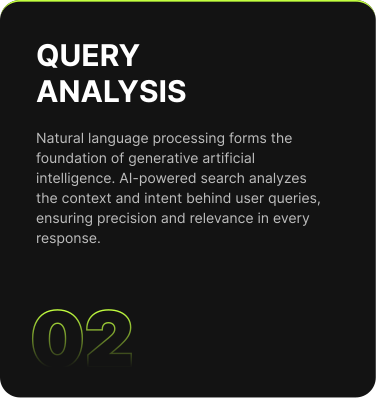
Unlike traditional search engines, AI search systems don't simply index pages. They:
HOW GEO DIFFERS FROM SEO: COMPARING APPROACHES
Imagine: a user asks ChatGPT or Perplexity a question and receives a ready-made answer mentioning your brand. They never even opened the search results page. This is AI-powered search—a new reality where visibility isn't determined by top-10 rankings but by how much trust generative systems place in your content.
Generative Engine Optimization (GEO) is a comprehensive set of strategies for transforming your website into an authoritative source for AI models. While traditional SEO focuses on competing for clicks in search results, GEO optimization works at a deeper level: it builds your brand's reputation within the artificial intelligence algorithms themselves.
WHY TRADITIONAL SEO NO LONGER WORKS ALONE
The business model of search systems is evolving. Google AI Overviews, Perplexity, and Claude provide users with ready-made answers directly in the interface. Statistics show that up to 40% of informational queries no longer result in website visits—users are satisfied with the AI response.
The Problem for Business: Even ranking #1 in Google doesn't guarantee traffic if your brand isn't mentioned in the generative answer.
The Solution: GEO website promotion ensures your company's presence inside AI responses, creating brand awareness and expert status without requiring clicks.
HOW GENERATIVE SEARCH SYSTEMS WORK
Unlike traditional search engines, AI search systems don't simply index pages. They:
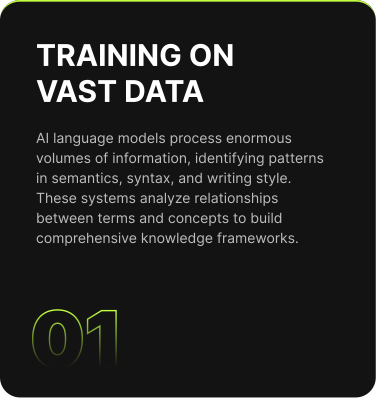
- Train on massive content datasets—your goal is to be included as an authoritative source
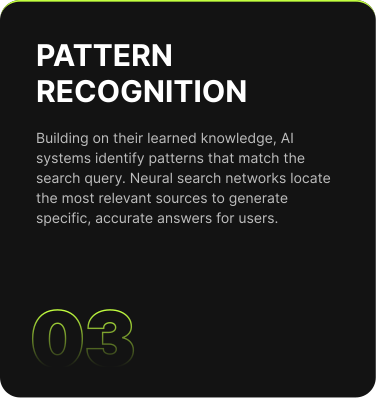
- Build lists of trusted resources—the system references them when generating answers
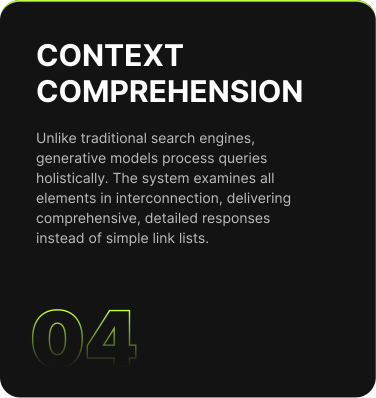
- Synthesize information—combining data from multiple sources into one cohesive response
HOW GEO DIFFERS FROM SEO: COMPARING APPROACHES
Comprehensive, data-backed
Query-optimized
Content Type
Expertise, factual accuracy
Link mass, technical factors
Work Priority
Citation frequency in neural search
Rankings, traffic, conversions
What We Measure
Generative model (LLM)
Ranking algorithm + human
Who "Reads" Content
Brand mention in AI response
Click on link in results
End Goal
GEO Approach
Traditional SEO
Aspect